Learning Outline
Reproductive Systems
A&P 2
| Warning — This part of the course includes graphic sexual content. If you can’t handle that, then don’t come to class. And seriously reconsider whether you even want to work in a health profession—if that’s the path you are on. |
| Because some graphic images will appear on Previews and online tests and exams, it is also important that you are sensitive to your surroundings. Avoid viewing these materials in inappropriate circumstances (for example, where others may be startled or offended by such graphics). |
|
Links marked with ! are particularly graphic in content.
|
The importance and nature of sexual reproduction
Survival of genes
Despite what you’ve heard, the prime importance is not survival of the individual or species
In The Selfish Gene , biologist Richard Dawkins explains the theory that reproduction, indeed all the mechanisms of life in general, can be explained in terms of the continued survival of genes
Genes are information —NOT strands of nucleotides (any more than the information contained in these notes is a string of letters; the information in the notes can be copied [multiplied] and even changed to another form such as speech or digital code or Swahili)
Thus genes build organisms to live in just as humans build houses to live in
- Likewise, organisms have homeostatic control mechanisms to maintain constancy just as homes have automatic control systems such as heating/cooling systems to maintain constancy
- Organisms provide a vehicle for the genes and the apparatus to make copies (children) that outlive the organism
- Thus, genes can be almost “immortal”
Individuals come & go—species come & go—genes can remain forever
Sexual mode of reproduction
Sexual / two-parent (rather than asexual/one-parent) reproduction allows more variation among offspring
Individual genes want to survive and through sexual reproduction can form coalitions with different genes to improve their chances that at least some gene copies will survive (those genes that end up in combinations that turn out to be successful)
- And . . . it’s more fun that way
Basics
Gonads
- Gonads are the primary sex organs
- Produce gametes and sex hormones
- Male gonad — testis (pl. testes)
- Female gonad — ovary
- Only one gonad is needed, but most of us have two so that we have a “spare” in case of injury or disease
Gametes — reproductive cells
- Have half the usual number of nuclear DNA molecules (chromosomes)
- Gametes have the haploid number (23) whereas all other cells have the diploid number (46)
- Male gamete — sperm (spermatozoan [plural, spermatozoa])
- Female — ovum (pl. ova) (oo- is a word part that means “egg” and is pronounced “oh-oh” NOT “oo” as in “zoo”)
Similarity of reproductive tract
Both systems have paired gonads and tubes to carry gametes from the gonads and out of the body
Both systems have gonads and tubes in a Y-shaped structure
Many reproductive organs (male/female) are derived from the same tissue and thus are analogous structures 
- For example, the folds on the outer rim of the female genitals (labia) exist in the male, except that in the male the testes have dropped down into the folds and the folds have fused at the midline to form the scrotum; thus, the labia and scrotum are analogous structures
  Life’s Greatest Miracle , a film from PBS’s Nova series, is required as a preview/review of the structure and function of human reproduction and development. Life’s Greatest Miracle , a film from PBS’s Nova series, is required as a preview/review of the structure and function of human reproduction and development. |
 You can click on NOVA to view it online (free) or you can view a DVD. You can click on NOVA to view it online (free) or you can view a DVD. |
Male Reproductive System
Functional anatomy
Testes (sing. testis)
- The male gonads (paired)
- Spermatogenesis — making of sperm (gamete) cells
- Secrete testosterone
- Originate near kidneys
- Descend through inguinal canal
- Gubernaculum (literally, “governor”) is a ligament that guides the way
- Temperature is lower outside the body cavity (low temp req’d for spermatogenesis)
- Cryptorchidism (crypt- “hidden” -orchid- “testis” -ism “condition”) occurs when one or both testes fail to descend completely into scrotum
- Descend through inguinal canal
- Structure
- Within scrotum
- Scrotum is fold of skin into which testes descend, stretching it into a pouch

- Dartos muscle in wall of scrotum & cremaster muscle around each testis regulate position of testes relative to body
- Temperature regulation
- Fibrous capsule (tunica albuginea)
- Surrounded by serous membranes forming the fluid-filled tunica vaginalis
- Surrounded by serous membranes forming the fluid-filled tunica vaginalis
- Scrotum is fold of skin into which testes descend, stretching it into a pouch
- Lobules
- About 250 lobules per testis
- Contain seminiferous tubules (semin- “seed” -ifer- “carry” -ous “pertaining to”)

- Semiferous tubules are made of germinal epithelium (70 cm each)
- Site of spermatogenesis
- Interstitial cells (of Leydig)
- Found between the seminiferous tubules
- Endocrine cells that secrete androgens (primarily testosterone)
- Rete testis (literally “network of the testis”)
- Network of tubules into which the seminiferous tubules carry the sperm
- Forms a sort of “exit lobby”
- Efferent ductules lead from rete testis to the epididymis
- Network of tubules into which the seminiferous tubules carry the sperm
- Within scrotum
Reproductive tract
- Epididymis
- Within scrotum; coiled tubule alongside testis (6 m)
- Storage of sperm for 1-3 weeks
- Sperm break down after 3 wks and are reabsorbed
- Conduction of semen (sperm and spermatic fluid)
- Where sperm learn to swim
- Secretes <5% of seminal fluid
- Contains glycogen (to nourish sperm)
- Vas deferens (vas “duct” or “vessel” deferens “detour”) also called ductus deferens
- Muscular tube
- Last part widens to form ampulla
- Last part widens to form ampulla
- Conducts semen from epididymis through inguinal canal into pelvic cavity, where it turns back down to behind the bladder to join the urethra (during emission)
- Left and right ductus deferens each join with a duct from a seminal vesicle (exocrine gland) to form an ejaculatory duct
- Muscular tube
- The left and right ejaculatory duct extend through the prostate gland and to the urethra
- Urethra
- Shared by reproductive & urinary systems
- Extends through penis, delivering semen (potentially) to the female’s vagina
- Two main parts — prostatic urethra & penile urethra
Accessory glands
- Produce seminal fluid
- Seminal vesicles
- Paired exocrine glands
- Duct joins ductus deferens behind bladder, just before the ductus deferens joins its partner to form the ejaculatory duct
- Contributes about 60% of seminal fluid at ejaculation
- Contains prostaglandins, fructose, etc.
- Prostate
- Unpaired (single) exocrine gland
- Surrounds first part of urethra (under bladder) like a donut
- Prostatitis or benign prostatic hypertrophy (BPH) can constrict urethra, interfering with urination
- BPH occurs in about 3 of every 4 men over 50 yrs old
- Prostatitis or benign prostatic hypertrophy (BPH) can constrict urethra, interfering with urination
- Has many ducts leading into prostatic urethra
- Contributes about 30% of seminal fluid at ejaculation
- Bulbourethral (Cowper) glands
- Tiny, paired exocrine glands
- Located near base of penis
- Duct leads into penile urethra
- Secrete <5% of seminal fluid
- Secretion released just before the rest of the semen arrives
- Therefore, called “pre-ejaculate”
- Lubricates penis/vagina
- Neutralizes pH
- Pre-ejaculate MAY contain sperm (thus fertilization may occur even if “ejaculate” never enters female body)
- Secretion released just before the rest of the semen arrives
Penis
- Urethra extends through penis
- Erectile columns
- Vascular reservoirs — arteries dilate, veins constrict during sexual arousal
- Corpora cavernosa (two) and corpus spongiosum
- Vascular reservoirs — arteries dilate, veins constrict during sexual arousal
- Insertion into female tract — delivery of semen/sperm !
- Coitus (sexual intercourse; copulation)
- Glans penis
- Distal enlargement of corpus spongiosum
- Highly sensitive skin on surface — sexual stimulation
- Foreskin (prepuce) is collar of skin over the glans
- Often removed by circumcision !
- MGM — male genital mutilation
- MGM — male genital mutilation
- Often removed by circumcision


Spermatogenesis
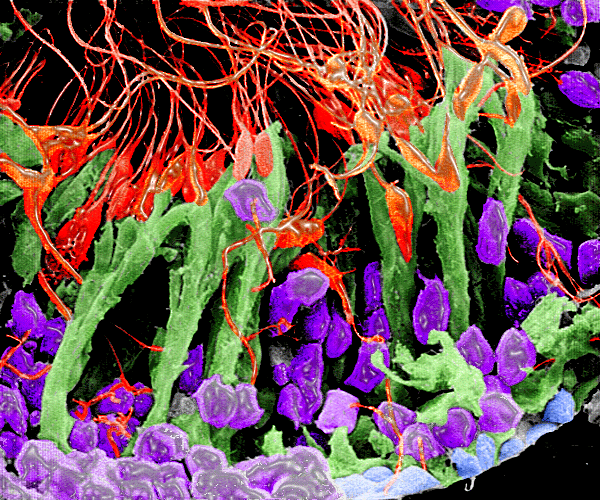
Germinal epithelium 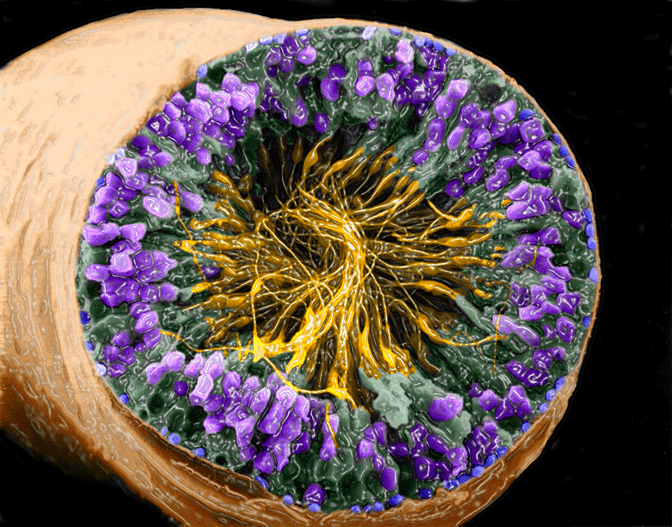
- Spermatogenic cells — produce sperm by means of meiotic cell division (NOT mitotic cell division)
- Sertoli (nurse) cells — support/nourish sperm cells
- Also called sustentacular cells
- Form blood-testis barrier (BTB)
- Protects sperm from antibodies and toxins in blood; regulates what gets through to sperm-producing cells
- Secrete inhibin
- Reduces FSH, thereby reducing sperm production—thus helping to regulate the rate of spermatogenesis
- Inhibin’s antagonist, activin, is produced in various tissues
- Promotes FSH secretion
- Counterbalances effects of inhibin
- Secrete androgen-binding protein (ABP) makes testosterone more water-soluble, thus increasing testosterone in seminiferous tubule (for sperm production)
Development of sperm cells
- Meiosis
- One parent cells produces four daughter cells
- Diploid parent produces haploid daughter cells
- Structure
- Head
- Acrosome is “cap”
- Enzymes (to get through “zona” coating around egg) and receptors (including olfactory receptors to “sniff out” an egg)
- Acrosome is “cap”
- Body or midpiece
- Mitochondria provide fuel (ATP) for movement (swimming)
- Acts as “engine house” because microtubules of the tail undergo reactions here that are similar to actin-myosin reactions (except here, it is a back-and-forth action that causes microtubules to “wiggle” the tail)
- Tail (flagellum)
- Several times longer than the diameter of the head
- Provides swimming ability
- Head
Seminal fluid (semen)
Combined secretions of epididymes, vesicles, prostate, bulbourethral glands
pH 7.5
- High pH to neutralize male urethra and female reproductive tract
Highly viscous and slippery to aid swimming of sperm
Ball park (no pun intended) figures (but highly variable)
- 120 million sperm per ml
- 2-6 ml per ejaculation
- Numbers vary with time since last ejaculation, hydration, general health and nutrition, who the partner is (sex with spouse has lower sperm count than sex with infrequent partner), stress and emotions, etc
Release of semen
- Emission — release of sperm from epididymis and through vas deferens
- Ejaculation — release of sperm from the body (through urethra)
- Usually occurs at orgasm
Capacitation
Stages of development of sperm after ejaculation and before fertilization
Complete development of the sperm does not occur until (and unless) the sperm nucleus joins with the egg nucleus to form the first cell of a new offspring (first cell is called the zygote)
Endocrine regulation
Gonadotropin releasing hormone (GnRH) from hypothalamus (to the anterior pituitary)
- Stimulates the anterior pituitary to release the gonadotropins
- Gonadotropins are hormones that stimulate the gonads
- Gonadotropins are FSH and LH
- FSH (follicle stimulating hormone)
- From anterior pituitary (to testis)
- Named for its function in the female (to stimulate ovarian follicles/eggs) but also exists in males
- Promotes spermatogenesis
- LH (luteinizing hormone)
- From anterior pituitary (to testis)
- Named for its function in the female (to stimulate dev/secretion of the corpus luteum of the ovary) but also exists in males
- Promotes male hormone (androgen — “maleness maker”) production in testis
- Testosterone (literally “steroid from the testis”) is the primary androgen in humans
- Development of primary/secondary sex characteristics
- Primary sex characteristics are those needed to produce gametes and get them out of the body
- Secondary sex characteristics are those helpful but not needed, such as male pattern of fat distribution, male hair growth, male’s larger larynx, and so on
- Anabolic steroid — testosterone (and its synthetic equivalents) stimulates manufacture of new protein filaments in muscles (anabolism) and thus increases strength
Controlled by long and short loop negative feedback
- Long loop means feedback on testosterone levels goes all the way back to the hypothalamus
- Short loop means feedback on FSH levels goes back to next higher level (the hypothalamus)
- Relatively small peaks and valleys and short, daily cycles compared to female
- Females have slow response to changes in hormone levels, meaning that the hormones can get to high peaks over many days before being reversed, then dip to very low valleys over many days before being reversed again
- This means that males are fertile all day every day (females, in contrast, are fertile only a few days out of every 28-day hormonal cycle)
Female reproductive system
Functional anatomy
Ovary
- Located in pelvic cavity (paired organs)
- Descend from position near kidney during fetal development (as do the testes, but don’t drop as far)
- Suspended by ligaments
- Structure
- Medulla (inner region)
- Cortex (outer region)
- Ovarian follicles are pockets in which eggs (pl. ova, sing. ovum) develop
- Ovarian follicles are pockets in which eggs (pl. ova, sing. ovum) develop
- All follicles are “started” before birth, but during each adult reproductive cycle a group of follicles resume their development
- Some studies now challenge the idea that new egg cells are not produced during adulthood
- Only one [usually] follicle/ovum per cycle reaches point of development where follicle bursts open, releasing the egg (ovulation)
- Some studies now challenge the idea that ovulation only occurs once per cycle. It may occur more often.
Uterine (fallopian) tubes
- Paired muscular tubes lined with folded, ciliated mucosa
- Fimbriae form a fringe of fingerlike processes at distal end of tube
- Help pull ovum into tube
- Fimbriae form a fringe of fingerlike processes at distal end of tube
- Conduct ovum toward uterus via action of cilia (& peristalsis & fimbriae)
- Site of gamete fusion (fertilization)
- Takes 3 days for egg to travel down fallopian tube, but egg can only be fertilized during first 24 hours after ovulation so fertilization must take place in first one-third of fallopian tube
Uterus
- Unpaired (single) organ
- Wall
- Endometrium
- Mucous lining
- Sensitive to sex hormones estrogen(s), progesterone
- Highly vascular
- Uterine glands (exocrine)
- Hormones cause endometrium to thicken and change through reproductive (menstrual) cycle, then when hormones drop off so do the new, outer layers of the endometrium
- Menses, menstruation from Latin menses meaning “month” after the 28-day lunar month which seems to be used as a time keeping signal by the pineal gland, which in turn influences reproductive hormone levels
- Endometriosis occurs when membranes outside the uterus (for example, in the vagina or peritoneum) also respond to hormonal changes, thickening then dropping off
- Mucous lining
- Myometrium
- Middle, muscular coat
- Smooth muscle contracts when stretched, which is a problem during pregnancy
- Hormones inhibit uterine contraction during pregnancy, then at end of gestation [time of pregnancy] hormones change and labor contractions begin
- Contracts during menstruation
- Contracts during orgasm
- Perimetrium
- Part of the peritoneum (lining of the abdominopelvic cavity)
- Covers outside of uterus
- Part of the peritoneum (lining of the abdominopelvic cavity)
- Endometrium
- Cervix
- Cervix is Latin for “neck” —cervix of uterus is neck of uterus (as in neck of a beer bottle)
- Cervical canal has mucus-producing glands
- Mucus forms a “plug” during nonfertile times, then becomes slippery during fertile times
- Internal os & external os of cervix (os is “opening”)
- Main functions
- Conducts sperm
- Peristalsis during orgasm helps move semen into and through uterus
- Protects and supports embryo/fetus during gestation
- Endometrium joins with placenta of offspring to form a physiological connection
- Endometrium joins with placenta of offspring to form a physiological connection
- Conducts sperm

Vagina (literally “sheath”)
- Extends from uterine cervix to the outside of the body (vulva)
- Receives penis/semen during intercourse
- Muscular walls reflexively adjust to accommodate various penis sizes
- Rhythmic contractions at orgasm
- Vaginal sweat – lubricating fluid released by vaginal wall during sexual arousal
- Birth canal – rhythmic contractions at birth
- Menstrual flow
Vulva
- All external genitals are grouped under the single term “vulva”
- Labia (literally “lips”)
- Two pairs of skin folds
- Labia majora — outer, larger folds covered by pubic hair (singular, labium majus)
- Labia minora — inner, thinner folds with no hair and are highly vascular (singular, labium minus)
- Vestibule — space between the labia minora
- Vestibular glands (function uncertain; may release lubricants during sex)
- Vaginal and urethral openings
- Margin of vaginal orifice (opening) may be a fold of skin called the hymen
- Clitoris
- Includes erectile tissue similar to that in penis
- Glans clitoris — head of clitoris, covered with sensitive “sexual” touch receptors
- Foreskin is a “hood” of skin that partly or entirely covers clitoris
- May be cut or removed in any of various ways in “female circumcision”
- FGM — female genital mutilation
- FGM — female genital mutilation
Oogenesis
Meiotic division
- Produces four daughter cells — one ovum and four polar bodies
Primary follicles
- Contains primary oocyte
- Stops mid-meiosis I — before birth
- Continues, one at a time, at puberty (resumes Meiosis I)
Secondary follicles
- Contains secondary oocyte (ovum) (Meiosis I is completed)
Ovulation
- Mature follicle ruptures, releasing ovum from surface
- Meiosis II is complete once a sperm enters
- The “crater” left behind after ovulation becomes the endocrine gland called the corpus luteum (lit. “yellow body”) that secretes hormones
Ovum that is released is surrounded by layers of cells
Some studies now challenge the notion that oogenesis cannot begin in the adult ovary and the notion that ovulation only occurs once per cycle
 |
Corpus luteum. Section of ovary with fully developed corpus luteum at top of photo. Click image to enlarge it. |
|---|
Hormonal regulation
Gonadotropin releasing hormone (GnRH) from hypothalamus
- FSH — follicle-stimulating hormone from anterior pituitary
- Stimulates maturation of a follicle
- Maturing follicle secretes estrogen
- Maintains female sex characteristics
- Causes endometrium to thicken
- LH — luteinizing hormone from anterior pituitary
- Stimulates ovulation and formation of corpus luteum
- Corpus luteum secretes progesterone
- Promotes endometrial vascularization
- More blood vessels so that offspring can implant successfully and build a placenta
- Placenta is circulatory and endocrine structure that forms a connection with the maternal blood supply
- More blood vessels so that offspring can implant successfully and build a placenta
- Promotes endometrial glandularization
- Uterine glands are like sweat glands in the endometrium that secrete a fluid that nourishes the offspring until the placenta is well established (fluid sometimes called “uterine milk”)
- Promotes endometrial vascularization
Menstruation
- Corpus luteum degenerates
- Estrogen/progesterone levels decrease
- Loss of hormonal “support” of endometrium causes sloughing (surface layers are shed; bleeding occurs)
- Low estrogen/progesterone levels trigger another rise in LH/FSH secretion (cyclic negative feedback)
- Uterine contractions help shedding; help stem bleeding
Pregnancy 
- Corpus luteum maintained by HCG (human chorionic gonadotropin) early in pregnancy
- Later, the placenta takes over supplying hormones from the ovaries (thus, responsibility for hormonal control shifts more and more to offspring rather than mother)
- Placental hormones have a variety of effects and combined effects
- Estrogen/progesterone
- Maintain uterine lining
- Inhibit LH/FSH (a new cycle would start otherwise)
- Progesterone/relaxin
- Inhibit uterine contractions
- Estrogen/relaxin
- Softens pelvic joints
- Enlarges vagina
- Placental lactogen
- Stimulates milk production
- Estrogen/progesterone
- Increased aldosterone increases water retention
- Extra precaution against dehydration
- Tissues of developing offspring are higher in water content than adult tissues
- Increased PTH (parathyroid hormone)
- Increased blood calcium levels for developing offspring (esp. fetal skeleton)
- Often increases risk of tooth cavities and stress fractures in the mother
- “Morning sickness” is nausea associated with pregnancy
- May subside later in pregnancy (then again, it may not)
- Doesn’t always occur (but don’t count on it)
- Probably decreases mother’s ingestion of unusual foods or spicy/herbal foods that may contain substances that will adversely affect the development of the offspring
- Teratogens are substances that cause developmental errors in developing offspring

Labor and delivery
- Triggered by cortisol ( a stress hormone) released by the offspring
- Thus, the offspring (not the mother) signals the end of pregnancy
- Prostaglandins are also involved
- Estrogen increases, progesterone decreases
- Allows uterine contractions
- Oxytocin (neurohypophysis) increases rate and strength of labor contractions
- Positive feedback mechanism — increased vaginal stretch causes more OT release, which stimulates more contraction, which pushes baby, causing more stretch, more OT, more contraction, more stretch, more OT, more contraction (and so on) until baby is delivered and cycle of positive feedback is broken (whew!)
- Oxytocin (neurohypophysis) increases rate and strength of labor contractions
- Allows uterine contractions
Mammary glands
Integumentary vs. reproductive
Anatomically, mammary glands are integumentary (skin) structures, NOT reproductive structures
However, mammary glands have a reproductive function in the sense that they provide nutrients to offspring during early development (birth to a year or so)
Functional anatomy
Breasts are mammary glands plus surrounding/supporting fat and ligaments, and skin 
Both males and females have breasts (with mammary glands)
- Rarely (thank goodness) male mammaries become functional to supply nutrients in the absence of adult females
- Anthropologists believe that constantly swollen breasts of human females make them more sexually attractive, even when they are not ovulating
Nipple — central bump with multiple openings of lactiferous ducts (literally “milk-carrying ducts”)
- Lactiferous ducts have sinuses that can be used like the bulb of an eye-dropper to pump milk when baby’s jaw squeezes them
- Nipple becomes swollen and erect (by arrector muscles, same as in goose bumps of the skin) when stimulated to help baby find and hold it
Areola is circle of thin skin surrounding nipple
- Often becomes darker by action of pregnancy hormones
- Infants cannot see well or interpret what they see well, but are known to be attracted to dark circles when they are hungry —thus the areola may help infants locate their food source more easily
- Infants cannot see well or interpret what they see well, but are known to be attracted to dark circles when they are hungry —thus the areola may help infants locate their food source more easily
- Areolar glands (Montgomery glands) !
- Enlarged sebaceous (oil) glands surrounding the nipple
- Reduces “chapping” of skin caused by wetness of baby’s saliva and milk
- May also help baby locate nipple by smell

Mammary glands
- Exocrine glands
- Milk
- Mixture of proteins, carbohydrates (esp. lactose), and emulsified fats
- Also includes antibodies (Ig) from mother’s immune system — passive immunity
- Lactation
- Production and release of milk
Hormones regulate breast function / lactation
Estrogen stimulates breast development at puberty and then more during pregnancy
Placental lactogen promotes milk production
Prolactin (adenohypophysis) promotes milk secretion
Oxytocin stimulates milk ejection (from ducts)
Human sexual response
Masters and Johnson 
- Physiological processes first verified by Dr. William Masters and his wife Dr. Virginia Johnson at their research institute at Washington University in St. Louis in the mid-twentieth century.
It has essentially 4 parts (in this order) 
 !
!  !
!
- 1. Excitement (arousal)
- The name says it all. One is stimulated sexually and becomes excited, showing several physiological changes including increased blood volume in the erectile tissues and other sexual tissues. (parasympathetic effect). The early part of this phase may be called “Desire.”
- 2. Plateau
- Once you have reached a peak of excitement, then the rate of physiological change levels off to a “plateau” or flat but raised level.
- This continues until stimulation decreases or stops or (if you are lucky) an orgasm occurs. (parasympathetic effect)
- 3. Orgasm
- At orgasm, there is a sudden switch to sympathetic effects, including contractions of the reproductive tract including ejaculation of semen in the male (a heck of a lot of subjective effects, as well).
- The classic model includes a single orgasm, but women more often than men can experience multiple orgasms within one sexual response.
- 4. Resolution
- After orgasm(s), continued sympathetic effects essentially “reverse” all the changes that occurred during the Excitement phase, including reduction of blood volume in erectile tissues.
This is a Learning Outline page.
Did you notice the EXTRA menu bar at the top of each Learning Outline page with extra helps?
Last updated: October 22, 2019 at 9:20 am